
When we protect water, we protect life itself.
From the rivers that sustain ecosystems to the water that supports agriculture, industry, and households, water connects every system that enables communities to thrive. Yet across the world, water quality is increasingly under pressure – not only from scarcity, but from pollution linked directly to how waste is managed.
Waste and water are inseparable. What enters the waste system inevitably finds its way into water systems if not treated responsibly. This is why modern waste management must extend beyond collection and disposal. It must actively protect water – turning waste into a safeguard rather than a threat.
The Growing Pressure on Water Systems
Globally, water pollution is recognised as one of the most significant environmental and public health risks of our time. The United Nations has repeatedly highlighted that untreated wastewater remains one of the largest sources of water contamination worldwide, affecting rivers, groundwater, and coastal ecosystems.
When wastewater and landfill leachate are poorly managed, the consequences ripple outward:
- Rivers and wetlands become overloaded with pollutants, disrupting aquatic ecosystems and biodiversity.
- Groundwater resources are compromised, threatening drinking water supplies and irrigation systems.
- Communities downstream face increased health risks, particularly in water-stressed regions where alternative sources are limited.
In South Africa, where water scarcity is already a defining challenge, protecting water quality is inseparable from protecting social and economic resilience. Waste management decisions made at a single facility can influence water systems far beyond its boundaries.
ETPs: Safeguarding Rivers and Communities
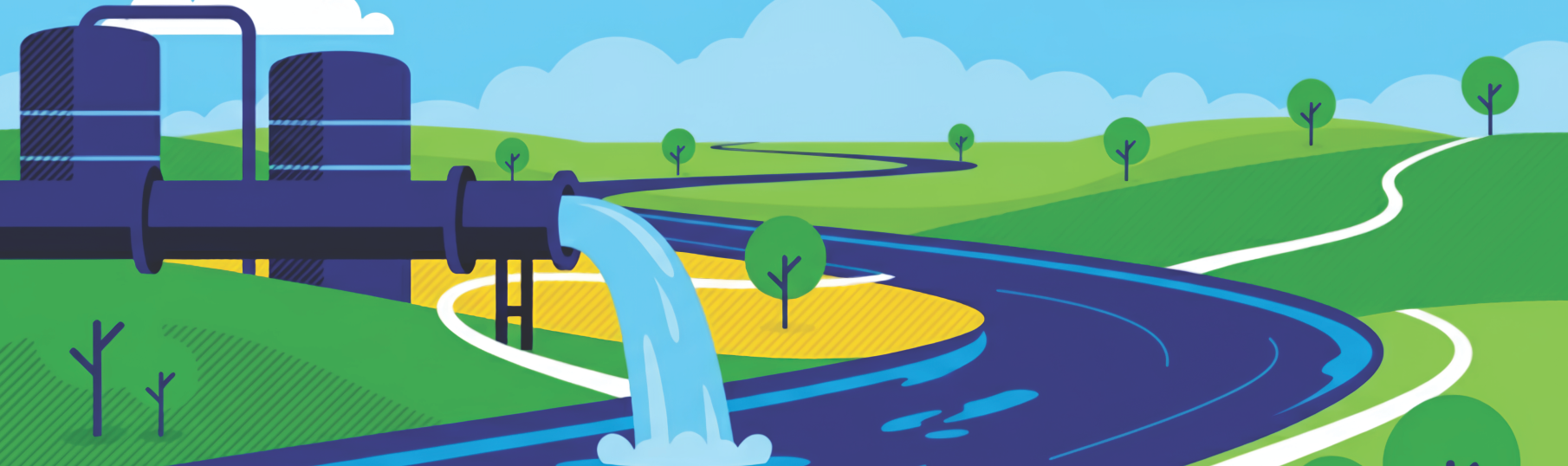
Effluent Treatment Plants (ETPs) sit at the critical intersection between waste and water. Their role is not simply to treat contaminated liquids, but to interrupt the pathway between pollution and the environment.
By treating leachate and wastewater to stringent standards, ETPs help ensure that:
- Harmful contaminants are removed before water re-enters natural systems.
- Downstream ecosystems are protected from cumulative pollution loads.
- Communities relying on shared water sources are safeguarded from long-term exposure risks.
In an interconnected system, this matters deeply. A river does not recognise municipal boundaries or fence lines. What enters it upstream shapes conditions for ecosystems, agriculture, and communities downstream. Effluent treatment therefore becomes a shared responsibility – one that links operational excellence directly to environmental stewardship.
Through responsible effluent treatment, waste management shifts from being a risk factor to becoming a protective layer within the water system.
Turning Wastewater into a Shared Resource
Beyond protection, modern effluent treatment plays a growing role in resource recovery. Treated wastewater is increasingly recognised as a valuable component of circular water management, particularly in water-stressed regions.
When managed correctly, treated effluent can:
- Reduce pressure on freshwater abstraction by enabling reuse within industrial systems.
- Support more resilient operations during periods of drought or supply disruption.
- Contribute to broader water security goals by keeping usable water within the system for longer.
This approach aligns with global shifts toward circular water economies, where wastewater is no longer seen as an unavoidable by-product, but as a resource that can be safely reintegrated into operational cycles.
At this level, effluent treatment becomes more than compliance. It becomes infrastructure for resilience, supporting both environmental protection and long-term operational sustainability.
Water Is Never Isolated
Just as waste is never isolated, neither is water.
A failure in effluent management does not remain contained. It moves through rivers, into soils, across ecosystems, and ultimately into communities. Conversely, when wastewater is treated responsibly, the benefits extend far beyond the point of discharge:
- Healthier rivers support biodiversity and ecosystem services.
- Cleaner water underpins agriculture, food security, and livelihoods.
- Protected water systems reduce long-term treatment and remediation costs for society as a whole.
This is the essence of interconnected systems. Water carries the consequences of our decisions, both good and bad, across landscapes and generations.
Protecting Water as a System Commitment
For Interwaste, effluent treatment is not an isolated service. It is part of an integrated approach that recognises how waste, water, land, climate, and communities intersect.
By investing in effective effluent treatment, Interwaste helps ensure that waste operations actively contribute to:
- Healthier aquatic ecosystems
- Safer water for downstream users
- Greater resilience in a water-constrained future
In doing so, waste management becomes a safeguard rather than a threat – a critical link in the system that protects life itself.
Because when we protect water, we are not just managing waste.
We are sustaining the systems that allow communities and ecosystems to endure.