
No business operates in isolation.
Every day, materials leave factories, warehouses and production facilities having fulfilled their original purpose. For many organisations, that is where the story ends. At Interwaste, it is often where a new one begins.
A residual material from one manufacturer may become an alternative fuel powering another industry. A by-product once destined for disposal can be processed, blended and recovered to replace virgin fossil fuels. What appears to be waste is often simply a resource waiting for the right connection.
This is the essence of the circular economy. It is not simply about recycling more or sending less to landfill. It is about recognising that resources continue to hold value long after their original purpose has ended, provided there is a system capable of unlocking that value.
In an interconnected world, waste does not end with one business. It becomes part of another’s opportunity.
Moving Beyond the Linear Economy
For generations, industrial growth followed a predictable pattern: extract raw materials, manufacture products, consume them, and dispose of what remained.
While this linear model fuelled economic development, it also created increasing pressure on finite resources, landfill capacity and the environment. Valuable materials were routinely discarded, despite retaining significant energy or resource potential.
Today’s environmental challenges demand a different way of thinking.
The circular economy challenges businesses to ask a simple question: What value still remains?
Instead of viewing residual materials as an unavoidable cost of doing business, circular systems seek to recover, repurpose and reconnect them to new applications.
This shift changes waste from an endpoint into a resource capable of supporting entirely new value chains.
Creating Connections Through Resource Recovery
One of the greatest barriers to circularity is not a lack of resources. It is a lack of connection.
Industries frequently generate materials that no longer serve a purpose within their own operations. At the same time, other industries are actively seeking alternative fuel sources and recovered materials that reduce both environmental impact and reliance on virgin resources.
Connecting these opportunities requires more than collection. It requires technical expertise, quality assurance and an understanding of how different waste streams can safely create value elsewhere.
This is where integrated waste management becomes an enabler of circularity.
Rather than asking where waste should be disposed of, the focus shifts to where it can contribute next.
Connecting Industries Through RDF
One of the clearest examples of this interconnected approach is Refuse Derived Fuel (RDF).
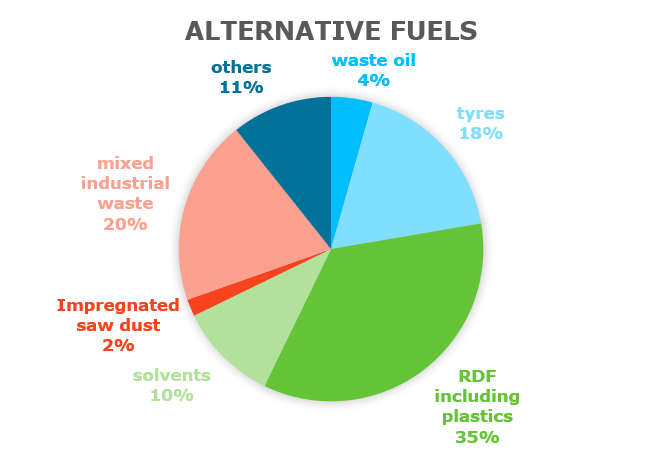
Not every material can be recycled back into its original form. However, many residual waste streams still contain significant embedded energy. Through careful characterisation, processing and blending, these materials can be transformed into a consistent alternative fuel suitable for energy-intensive industries such as cement manufacturing.
Interwaste’s blending platform is designed to create these new connections.
Residual materials from multiple industries are assessed, processed and blended to produce alternative fuels that meet strict quality and performance requirements. Materials that might otherwise occupy valuable landfill airspace instead continue their journey within the economy, replacing traditional fossil fuels in industrial processes.
The outcome is far greater than waste diversion.
One industry’s residual material becomes another industry’s energy solution.
This is circularity in practice – not simply moving waste, but creating an entirely new value chain that benefits both businesses and the environment.
Circularity Depends on Trust
These connections do not happen by chance.
Industrial circularity depends on confidence that recovered materials are safe, consistent and fit for purpose. Every new recovery pathway relies on rigorous assessment, regulatory compliance and strong partnerships between waste producers, processors and end users.
Trust is built through:
- Accurate waste characterisation
- Consistent quality assurance
- Responsible processing and blending
- Full traceability across the value chain
- Long-term collaboration between industries
Without these foundations, circular systems cannot function effectively.
Interwaste’s role extends beyond managing waste. It is about managing the complexity that allows materials to move safely and confidently between industries, ensuring value is retained at every possible stage.
Industries Are Part of the Same System
Circularity is often discussed as an environmental objective, but it is equally an economic one.
When businesses share resources more effectively, they reduce dependence on virgin materials, strengthen supply chains and improve resilience against resource constraints. Every successful recovery pathway creates value beyond the individual organisation, supporting broader industrial efficiency while reducing environmental pressure.
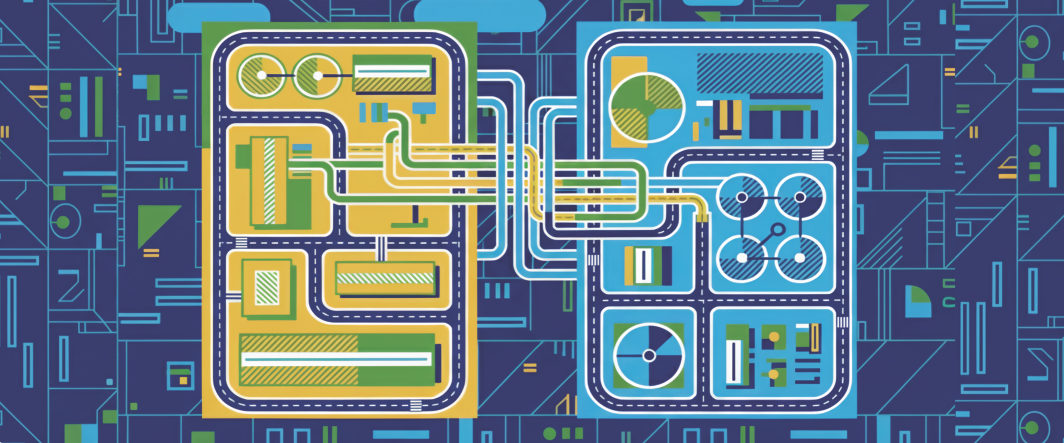
Just as rivers connect landscapes and ecosystems connect biodiversity, industries are connected through the movement of resources.
Recognising these relationships allows businesses to become active participants in a system where waste is no longer viewed as an unavoidable by-product, but as a resource capable of supporting future growth.
Throughout this series, we have explored how waste connects to water, soil, biodiversity, health and our oceans. This month reminds us that these are not the only connections that matter.
Industries are interconnected too.
Every manufacturer, recycler, processor and energy user forms part of a larger system where materials continue creating value long after their original purpose has ended.
Interwaste’s role is to make those connections possible – linking businesses, technologies and recovery pathways so that waste is viewed not as an endpoint, but as the beginning of something new.
Because a circular economy is not built by individual organisations.
It is built by the connections between them.