
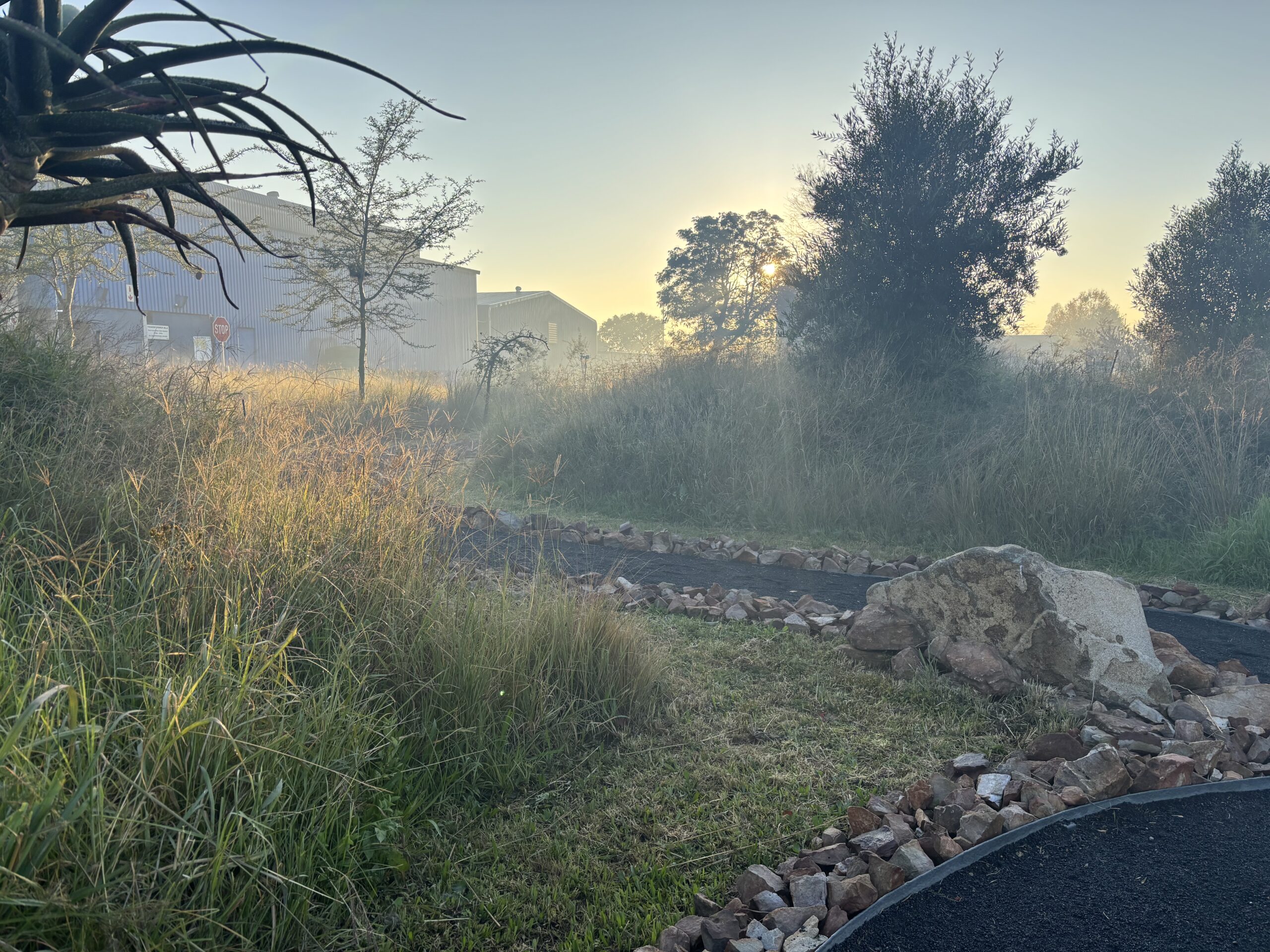

When people think about biodiversity conservation, industrial facilities are rarely the first environments that come to mind.
Yet across the world, growing pressure on ecosystems, rapid urbanisation and habitat loss are forcing businesses to rethink the role operational spaces can play in supporting environmental restoration. Increasingly, biodiversity is no longer viewed as a separate conservation issue, but as a critical component of long-term environmental sustainability, climate resilience and responsible land management.
This year’s International Day for Biological Diversity provides an opportunity to reflect on that shift and on how even heavily transformed industrial environments can contribute positively to ecological recovery when restoration is approached intentionally.
At Interwaste’s Germiston facility in Gauteng, an ongoing biodiversity enhancement initiative is demonstrating exactly that.
Reimagining an Industrial Landscape
Located within a densely urban and industrialised area, the Interwaste Germiston facility is not a natural conservation area. Like many operational sites across South Africa, portions of the landscape had historically been transformed through infrastructure development, landscaping and conventional lawn maintenance.
In 2022, work began to rehabilitate part of the site into a dedicated Biodiversity Enhancement Zone designed to emulate a natural Highveld grassland ecosystem using indigenous vegetation and ecological restoration principles.
The intention was not simply aesthetic landscaping. The project was developed to encourage the gradual return of ecological function, improve habitat availability and create a more biodiverse environment within an otherwise transformed industrial setting.
Today, approximately two years later, the results are becoming increasingly visible.
From Lawn Space to Living Ecosystem
The original hotspot area has become largely self-sustaining, with indigenous trees adapting exceptionally well and groundcover vegetation now firmly established throughout the site.
Alongside planted vegetation, naturally occurring indigenous shrubs, grasses, flowers and forbs have continued establishing over time, gradually creating the structure and diversity associated with functioning grassland systems.
This ecological progression is important because biodiversity recovery is rarely immediate. Healthy ecosystems develop incrementally as vegetation structure improves, soil conditions stabilise and species begin reoccupying available habitat.
At the Germiston site, ecological monitoring indicates that this process is actively underway.
Baseline biodiversity assessments conducted during the early establishment phase identified limited but gradually developing ecological activity within the newly rehabilitated area. Follow-up reassessments conducted earlier this year showed measurable increases in species presence and biodiversity utilisation.
Bird species observed on site increased from 22 species to 56 species, while installed bat hotels are now occupied and functioning at capacity. Additional insect species continue to be observed and documented as ecological conditions within the site improve.
Independent ecological assessments conducted onsite also confirmed that indigenous flora and fauna are increasingly establishing within the biodiversity zone despite the surrounding industrial landscape.
Why Biodiversity Matters in Industrial Environments
Biodiversity plays a far broader role than many people realise.
Healthy ecosystems contribute toward stormwater management, pollination, soil stability, carbon storage and natural pest regulation. They also improve ecological resilience, helping environments better withstand pressures associated with climate variability, invasive species and environmental degradation.
Within urban and industrial environments particularly, biodiversity restoration can help counteract the ecological fragmentation caused by development.
While industrial sites may never replicate fully natural ecosystems, introducing indigenous vegetation and habitat features can still create important ecological stepping stones for species moving through heavily transformed landscapes.
At Germiston, the biodiversity hotspot has already begun demonstrating several of these benefits. Indigenous vegetation is improving habitat availability while also contributing toward stormwater management and ecological connectivity within the site.
The project also reinforces an important principle within modern environmental management: sustainability is not only about minimising impact, but increasingly about restoring ecological value wherever possible.
Managing Ecological Change Realistically
An important aspect of ecological restoration is recognising that natural systems evolve dynamically over time.
Within the Germiston Biodiversity Enhancement Zone, the periodic emergence of alien and invasive plant species has formed part of this process. While invasive species management remains critical, their presence also reflects broader ecological activity occurring within the recovering environment, including seed dispersal through wind, birds and insect movement.
Rather than relying exclusively on herbicide application, the site has incorporated ongoing manual invasive species management and monitoring practices aimed at maintaining ecological balance while supporting longer-term habitat development.
This adaptive management approach is central to successful ecological rehabilitation, particularly within operational environments where environmental conditions continue changing over time.
Expanding the Biodiversity Vision
Building on the progress of the original hotspot, planning for a second biodiversity enhancement area at the Germiston facility is already underway.
Additional indigenous tree planting and landscaping activities have commenced, with implementation expected to continue through to 2028. Over time, sections of conventional landscaped lawn will transition into more natural rolling grassland habitat designed to improve ecological connectivity between the two biodiversity zones.
The project is also helping inform biodiversity rehabilitation thinking across other Interwaste operational facilities, including initial invasive species control and grassland rehabilitation initiatives at Klinkerstene Waste Park.
Biodiversity as Part of the Sustainability Conversation
Globally, biodiversity is becoming an increasingly important component of environmental, social and governance (ESG) strategies and sustainability reporting frameworks.
Businesses are under growing pressure not only to reduce environmental harm, but to actively contribute toward ecological resilience and restoration.
Projects like the Germiston Biodiversity Enhancement Zone demonstrate that biodiversity enhancement does not need to be limited to large conservation estates or protected areas. Even within industrial settings, carefully planned environmental interventions can contribute toward measurable ecological improvement over time.
Importantly, these projects also help shift the conversation around what environmental responsibility can look like within operational environments.
The International Day for Biological Diversity serves as a reminder that ecological restoration is not solely the responsibility of conservation organisations or governments. Long-term biodiversity resilience will increasingly depend on collaborative efforts across industries, sectors and landscapes.
Sometimes, meaningful ecological recovery begins with simply creating space for nature to return.